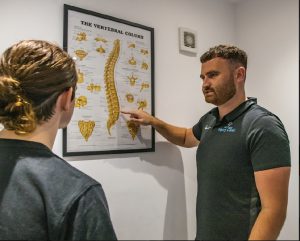
We combine hands-on treatment, expert rehabilitation, and a personalised, patient-first approach. Join us at Motion to start your road to recovery today.
Back pain is one of the most common reasons people seek help at Motion.
For some, it starts suddenly. You bend down to pick something up, get out of bed or finish a workout, and suddenly your back doesn’t feel right.
For others, it’s something that’s been building for weeks or months. A persistent ache after sitting at work, stiffness first thing in the morning or discomfort that keeps returning whenever you try to exercise.
Whatever the situation, one of the most common questions we hear is:
“Should I get this checked, or will it settle on its own?”
The answer depends on your symptoms, how they’re affecting you and how things are progressing.
Does back pain always need treatment?
Not necessarily.
The good news is that most episodes of lower back pain aren’t caused by anything serious, and many improve over time.
In fact, staying active, continuing with comfortable everyday movements and gradually returning to normal activities can often be helpful.
But that doesn’t mean you should simply ignore pain that’s affecting your life.
If you’re struggling to work comfortably, sleep properly, exercise or carry out everyday tasks, getting some professional advice can help you understand what’s happening and what to do next.
When should you consider seeing a Physiotherapist?
There isn’t a set number of days you need to wait before seeking help.
However, an assessment may be useful if:
Your back pain isn’t improving as expected.
You keep experiencing the same problem.
Pain is affecting your sleep, work or everyday activities.
You’re avoiding movement because you’re worried about making things worse.
You have pain travelling into your buttock or leg.
You’re unsure what exercises or activities are safe.
You want to return to the gym, running or sport but don’t know where to start.
Sometimes people come to us with significant pain. Other times, their pain is relatively mild, but the uncertainty around it is stopping them from doing things they enjoy.
Both are valid reasons to seek advice.
What actually causes back pain?
Back pain can be influenced by a number of factors.
Muscles, joints, discs and other structures can all contribute to symptoms. Previous episodes, physical demands, sleep, stress and changes in activity can also influence how someone experiences pain.
Importantly, the amount of pain you’re experiencing doesn’t always reflect the amount of damage or injury present.
Someone can experience significant discomfort without having a serious structural injury.
Equally, not every episode of back pain has one identifiable structure responsible for the symptoms.
That’s why we don’t believe in jumping to conclusions based on where someone points to their pain.
We want to understand the whole picture.
What happens during a back pain assessment at Motion?
We’ll start by listening.
When did your symptoms begin? What makes them better or worse? Have you experienced anything similar before? And, importantly, what is your back pain stopping you from doing?
From there, we’ll assess your movement, strength and any relevant neurological symptoms to help us understand the problem and identify whether further medical investigation is needed.
We’ll explain our findings in language that makes sense, without unnecessarily complicated terminology.
Treatment may involve hands-on techniques to help manage symptoms, exercises to restore movement and strength, and practical advice about returning to everyday activities.
But there’s no one-size-fits-all approach.
The aim isn’t simply to make your back feel better during an appointment. It’s to help you feel confident using it again outside the clinic.
Should you rest when your back hurts?
A little adjustment to your usual routine can sometimes be sensible, particularly during a painful flare-up.
However, prolonged bed rest is generally not recommended for uncomplicated back pain.
Movement doesn’t have to mean lifting heavy weights or pushing through significant pain.
It might start with short walks, comfortable mobility exercises or gradually returning to activities you’ve been avoiding.
We’ll help you find a sensible starting point and build from there.
When might back pain need urgent medical attention?
Although most back pain isn’t serious, some symptoms need urgent assessment.
Seek emergency medical attention if you develop new difficulty passing urine, loss of bladder or bowel control, numbness around the genitals or saddle area, or significant or worsening weakness in both legs.
Back pain following major trauma, or accompanied by fever, feeling significantly unwell or other concerning symptoms, also needs prompt medical assessment.
These situations are different from the typical back pain we see in clinic and shouldn’t be managed by simply booking a routine appointment.
Getting back to life with less worry
Whether your goal is sitting comfortably at work, picking up your children, getting back to golf or returning to the gym, your rehabilitation should reflect what matters to you.
At Motion, we want you to understand your back pain, feel confident moving again and have a clear plan for getting back to normal.
You don’t need to wait until you’re in unbearable pain to ask for help.
Struggling with back pain?
Book an Initial Assessment at Motion Injury Clinic in Blackpool and let’s work out your next step together.
Bring your report or any relevant information with you if you have it.
We’ll consider the scan findings alongside your symptoms, physical assessment and what you’re actually struggling to do
That’s absolutely fine.
Your goal might be getting through work comfortably. Walking the dog. Playing with your children. Gardening. Sleeping better. Going on holiday. Or simply moving without constantly thinking about pain.
You don’t need an athletic goal for it to matter.
Your goal is our starting point.
An Initial Assessment lasts approximately 45 minutes, giving us time to understand your symptoms, carry out an appropriate assessment, explain our findings and discuss what happens next.
Some discomfort during rehabilitation doesn’t automatically mean you’re causing damage or making the problem worse.
What is appropriate depends on the injury, your symptoms and the stage of your recovery.
We’ll help you understand what responses we’re comfortable with, what to look out for and when something needs adjusting.
Yes. We offer pre-event and post-event Sports Massage.
Your session can be adapted depending on whether you’re preparing for an event or recovering afterwards.